

Roasted Brussels Sprouts and Asparagus Recipe Guide
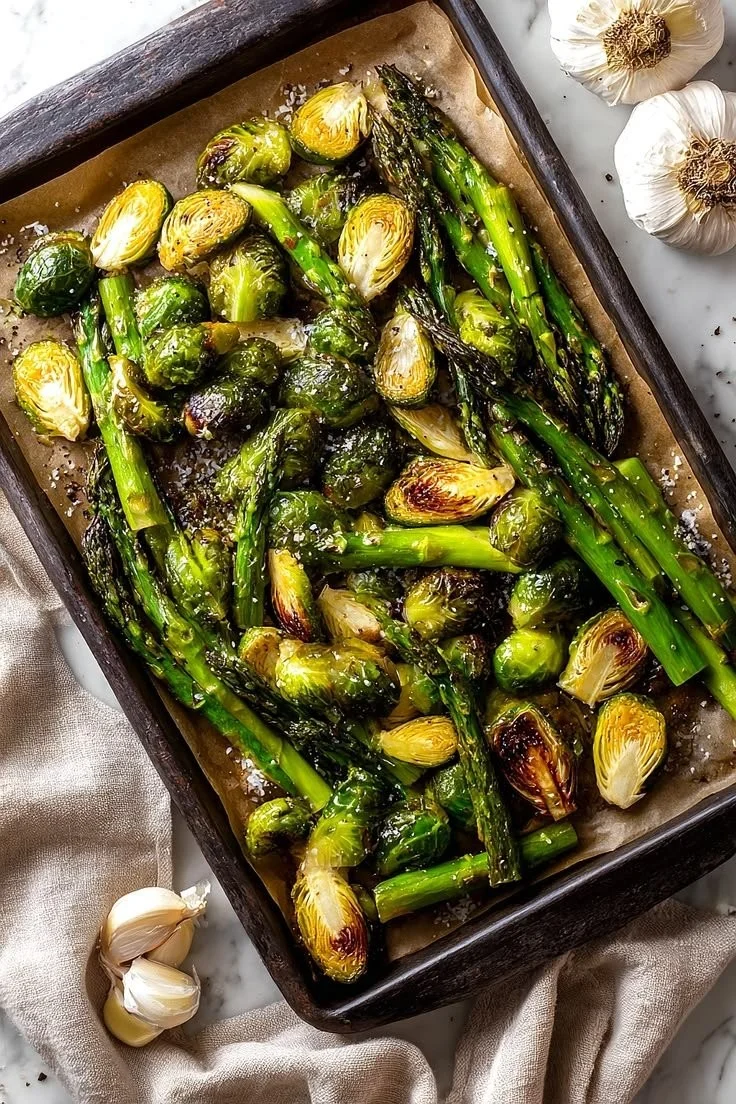
Roasted Brussels Sprouts and Asparagus is a simple oven-roasted vegetable dish featuring crisped sprouts and tender asparagus, seasoned with garlic. The method yields caramelized edges, vibrant color, and an easy side that pairs with proteins; consult Grilled Asparagus with Lemon and Garlic for lemon-roast tips.
| Prep Time | 10 minutes |
|---|---|
| Cook Time | 20–25 minutes |
| Total Time | 30–35 minutes |
| Servings | 4 |
| Difficulty | Easy |
| Cuisine | American / Contemporary |
Why This Recipe Works
Roasted Brussels Sprouts and Asparagus achieves crisp caramelization and tender interiors through high-heat roasting and minimal handling. I rely on 425°F heat so the vegetables brown quickly while keeping their inner texture vibrant and appealing.
I often halve the sprouts and cut asparagus into uniform pieces to ensure even cooking and consistent bite. My experience shows that a light coating of oil and a quick flip at halfway create more surface crispness and concentrated flavor.
{image_template}
Ingredients
| Ingredient | Quantity | Notes (alternatives) |
|---|---|---|
| Brussels sprouts, trimmed and halved | 1 lb | Use baby Brussels sprouts for faster roasting; trim tough stems before halving. |
| Asparagus, trimmed and cut into 2-inch pieces | 1 lb | Substitute broccolini or green beans for a different texture and similar cook time. |
| Olive oil | 3 tablespoons | Use avocado oil for higher smoke point; coconut oil will add sweetness. |
| Salt and pepper | To taste | Sea salt and freshly cracked pepper yield the best finish. |
| Garlic, minced | 2 cloves | Use 1 teaspoon garlic powder if fresh garlic is unavailable. |
| Balsamic vinegar (optional) | 1 teaspoon | Use lemon juice for brightness, or omit for a simple roast. |
| Parmesan cheese for serving (optional) | As desired | Use Pecorino Romano for a sharper, saltier finish. |
Step-by-Step Instructions
This section provides clear, phased steps to roast vegetables evenly and finish with optional garnishes. Follow each action in order to produce crisp, tender results and predictable timing.
Phase 1: Preheat and Prep
- Preheat the oven to 425°F (220°C).
- Trim the Brussels sprouts and halve them through the stem for even cooking.
- Trim asparagus ends and cut stalks into approximately two-inch pieces for uniform size.
- Minced the garlic finely so it distributes evenly across the vegetables.
Phase 2: Toss and Arrange
- Toss the Brussels sprouts and asparagus with olive oil, salt, pepper, and minced garlic in a large bowl until evenly coated.
- Spread the vegetables in a single layer on a rimmed baking sheet to prevent steaming.
- Arrange the cut sides of Brussels sprouts face down for better caramelization during roasting.
Phase 3: Roast and Finish
- Roast in the oven for 20–25 minutes, flipping halfway through to ensure even browning and crisp edges.
- Check tenderness with a fork; the sprouts should be soft inside and the asparagus should be tender but not mushy.
- Drizzle with balsamic vinegar if desired and toss briefly to coat before plating for a touch of acidity.
- Top with freshly grated Parmesan cheese immediately after roasting so it melts slightly onto the warm vegetables.
Chef Tips for Perfect Results
These concise tips help ensure consistent roast results and bright final flavor every time you cook this blend. Apply the tips to tweak texture and seasoning to suit your preferences.
- Use high heat and space vegetables apart for crisp edges; overcrowding causes steaming rather than roasting.
- Pat vegetables dry after washing to prevent excess moisture and to promote faster browning in the oven.
- Cut sprouts and asparagus to similar sizes so they finish cooking simultaneously and require minimal flipping.
- Add garlic toward the end of tossing if you prefer a milder roasted garlic taste and to prevent burning.
- Finish with a small splash of balsamic or a sprinkle of Parmesan to introduce acidity and umami; these boost perceived richness.
- For a sweeter glaze, adapt techniques from Crispy Maple-Glazed Carrots and Brussels Sprouts, applying maple sparingly to avoid burning.
Common Mistakes to Avoid
Recognizing common pitfalls helps you correct them quickly and yield better roasted vegetables consistently. Each mistake below explains why it happens and how to fix it effectively.
Overcrowding the pan causes steaming rather than roasting, producing soggy vegetables. Fix this by using two pans or a larger sheet to allow airflow and crisping during roasting.
Uneven cutting leads to mixed doneness, where some pieces are raw and others overcooked. Fix this by cutting all pieces to a consistent two-inch size before tossing with oil.
Using too little oil prevents proper browning and causes dryness, while too much oil leads to greasy results. Fix this by using the recommended three tablespoons and adjusting slightly for pan size.
Adding salt only after roasting can yield flat seasoning, while salting too early draws out moisture. Fix this by seasoning before roasting and finishing with a light extra sprinkle if needed.
Burnt garlic leaves a bitter aftertaste when mixed raw and roasted at high heat. Fix this by tossing garlic with the vegetables just before placing them in the oven, or add minced garlic five minutes before the end.
Variations and Substitutions
This table lists smart swaps that preserve texture while shifting flavor profiles for different palates and occasions. Choose substitutions based on the impact described to maintain the dish balance.
| Ingredient | Substitution | Impact on Flavor |
|---|---|---|
| Brussels sprouts | Broccoli florets or cauliflower | Broccoli adds earthiness; cauliflower brings milder sweetness and similar roast texture. |
| Asparagus | Green beans or broccolini | Green beans retain snap; broccolini tastes slightly sweeter and cooks in comparable time. |
| Olive oil | Avocado or grapeseed oil | Avocado oil tolerates higher heat without flavor change; grapeseed is neutral and light. |
| Balsamic vinegar | Lemon juice or sherry vinegar | Lemon brightens with citrus notes; sherry vinegar adds nuanced sweetness without heaviness. |
| Parmesan cheese | Pecorino Romano or nutritional yeast | Pecorino is sharper and saltier; nutritional yeast keeps it vegan with cheesy umami notes. |
| Spice add-in | Red pepper flakes or smoked paprika | Red pepper flakes add heat; smoked paprika contributes smoky warmth and color. |
| Finish idea | Honey Sriracha glaze | Honey Sriracha gives sweet-heat contrast; try the honey-sriracha approach from Honey Sriracha Brussels Sprouts for inspiration. |
Serving Suggestions and Pairings
Serve these roasted vegetables warm alongside proteins or grain dishes to create balanced meals for weeknight dinners or festive occasions. Pair them intentionally with mains and sauces to highlight both crisp and tender textures.
Pair this dish with roasted chicken, seared salmon, or pan-roasted pork chops for hearty family meals, and offer a lemon-herb sauce on the side for brightness. For vegetarian menus, serve with a warm quinoa pilaf or a nutty farro salad to add protein and rustic heft.
Consider serving at holiday meals such as Thanksgiving or Christmas where the caramelized sprouts complement richer mains, and present the veg on a warmed platter garnished with toasted nuts and shaved Parmesan.
Storage and Reheating
Store roasted Brussels sprouts and asparagus properly to maintain texture and flavor for several days. Follow recommended methods below for the best refrigerated and reheating results.
| Method | Duration | Instructions |
|---|---|---|
| Refrigerator | 3–4 days | Cool completely, store in an airtight container, and reheat in a 400°F oven for 5–8 minutes to re-crisp. |
| Freezer | Not recommended | Freezing changes texture and creates sogginess; freeze only if planning to use in purees or soups later. |
| Microwave (quick) | Immediate | Cover and microwave on medium power for short intervals; finish in a hot skillet to restore crispness. |
| Skillet re-crisp | Immediate | Sear leftover vegetables in a hot oiled skillet for two to four minutes to revive exterior crispness. |
For food safety and storage recommendations, refer to official guidance at the USDA website for maximum refrigerator durations and proper cooling practices, and follow best practices when reheating to safe temperatures.
USDA food safety guidance offers reliable standards for storing cooked vegetables and minimizing foodborne illness risks.
Nutritional Information
This table provides approximate values per serving to help with meal planning and dietary considerations. Values are approximate and will vary with exact ingredient brands and portion sizes.
| Nutrient | Amount per Serving |
|---|---|
| Calories | 140 kcal (Approximate values) |
| Protein | 5 g |
| Total Fat | 9 g |
| Carbohydrates | 12 g |
| Fiber | 5 g |
| Sodium | 220 mg (varies by salt amount) |
| Vitamin C | 55% DV |
| Vitamin K | 120% DV |
Frequently Asked Questions
This FAQ answers common preparation, substitution, and storage queries to help you roast these vegetables with confidence and predictable outcomes. Each answer is concise and practical to apply.
Can I substitute frozen vegetables for fresh in this roasted recipe?
Yes, you can substitute frozen vegetables, but expect softer texture and less browning after roasting. Thaw and pat dry thoroughly, then increase oven temperature slightly and roast longer to remove extra moisture.
How do I know when the Brussels sprouts and asparagus are properly done?
The vegetables are done when sprouts are tender inside and browned on the edges and asparagus pierces easily with a fork. Test by inserting a fork where the stem meets the crown; it should slide in with slight resistance but no toughness.
What should I do if my vegetables steam instead of roast?
The fix for steaming is to spread pieces in a single layer with space between them and avoid overcrowding the pan. Use a hot oven and flip halfway through to encourage browning and evaporate surface moisture quickly.
Can I make Roasted Brussels Sprouts and Asparagus ahead of time?
Yes, you can roast and refrigerate the vegetables for up to four days, then reheat and re-crisp before serving. Store in an airtight container and revive in a 400°F oven or hot skillet for best texture.
What are good sauces or finishes to serve with roasted Brussels sprouts and asparagus?
Lemon vinaigrette, balsamic glaze, or shaved Parmesan pair exceptionally well and enhance natural roast flavors. Choose a bright acidic finish for balance or a savory cheese to add umami and mouthfeel.
Conclusion
Roasted Brussels Sprouts and Asparagus delivers crisp caramelization, tender interiors, and adaptable seasoning for weeknight dinners or holiday spreads. Use the high-heat method, follow the step-by-step sequence, and finish with balsamic or Parmesan to amplify signature flavor.
Related recipes you might enjoy: Crispy Maple-Glazed Carrots and Brussels Sprouts, and Honey Sriracha Brussels Sprouts.
For further reading on vegetable roasting techniques and nutritional benefits, consult the Harvard T.H. Chan School of Public Health resources for evidence-based guidance on vegetable preparation and health impact.
Print
Roasted Brussels Sprouts and Asparagus
A simple oven-roasted vegetable dish featuring crisped Brussels sprouts and tender asparagus, seasoned with garlic.
- Total Time: 35 minutes
- Yield: 4 servings 1x
Ingredients
- 1 lb Brussels sprouts, trimmed and halved
- 1 lb Asparagus, trimmed and cut into 2-inch pieces
- 3 tablespoons Olive oil
- Salt and pepper, to taste
- 2 cloves Garlic, minced
- 1 teaspoon Balsamic vinegar (optional)
- Parmesan cheese for serving (optional)
Instructions
- Preheat the oven to 425°F (220°C).
- Trim the Brussels sprouts and halve them through the stem for even cooking.
- Trim asparagus ends and cut stalks into approximately two-inch pieces for uniform size.
- Minced the garlic finely so it distributes evenly across the vegetables.
- Toss the Brussels sprouts and asparagus with olive oil, salt, pepper, and minced garlic in a large bowl until evenly coated.
- Spread the vegetables in a single layer on a rimmed baking sheet to prevent steaming.
- Arrange the cut sides of Brussels sprouts face down for better caramelization during roasting.
- Roast in the oven for 20–25 minutes, flipping halfway through to ensure even browning and crisp edges.
- Check tenderness with a fork; the sprouts should be soft inside and the asparagus should be tender but not mushy.
- Drizzle with balsamic vinegar if desired and toss briefly to coat before plating.
- Top with freshly grated Parmesan cheese immediately after roasting so it melts slightly onto the warm vegetables.
Notes
Use baby Brussels sprouts for faster roasting; substitute broccolini or green beans for different textures.
- Prep Time: 10 minutes
- Cook Time: 25 minutes
- Category: Side Dish
- Method: Roasting
- Cuisine: American
- Diet: Vegetarian
Nutrition
- Serving Size: 1 serving
- Calories: 140
- Sugar: 3g
- Sodium: 220mg
- Fat: 9g
- Saturated Fat: 1g
- Unsaturated Fat: 7g
- Trans Fat: 0g
- Carbohydrates: 12g
- Fiber: 5g
- Protein: 5g
- Cholesterol: 0mg
Keywords: Brussels sprouts, asparagus, roasted vegetables, healthy side dish